
Many families we support face not just illness, but hunger. Caring for a sick loved one often means giving up work, leaving little money for basics. Some even sell their land to pay for treatment, with nowhere left to grow food.
In early 2025, our hospice partners reported that half of their patients didn’t have enough to eat, and in some areas the need was even higher. With limited funds, only a fraction could be helped.
Good nutrition is vital for people receiving palliative care. It helps patients stay strong, fight infections, tolerate treatments like chemotherapy, and reduces nausea from essential pain relief. But for many families, simply putting food on the table is a daily struggle.
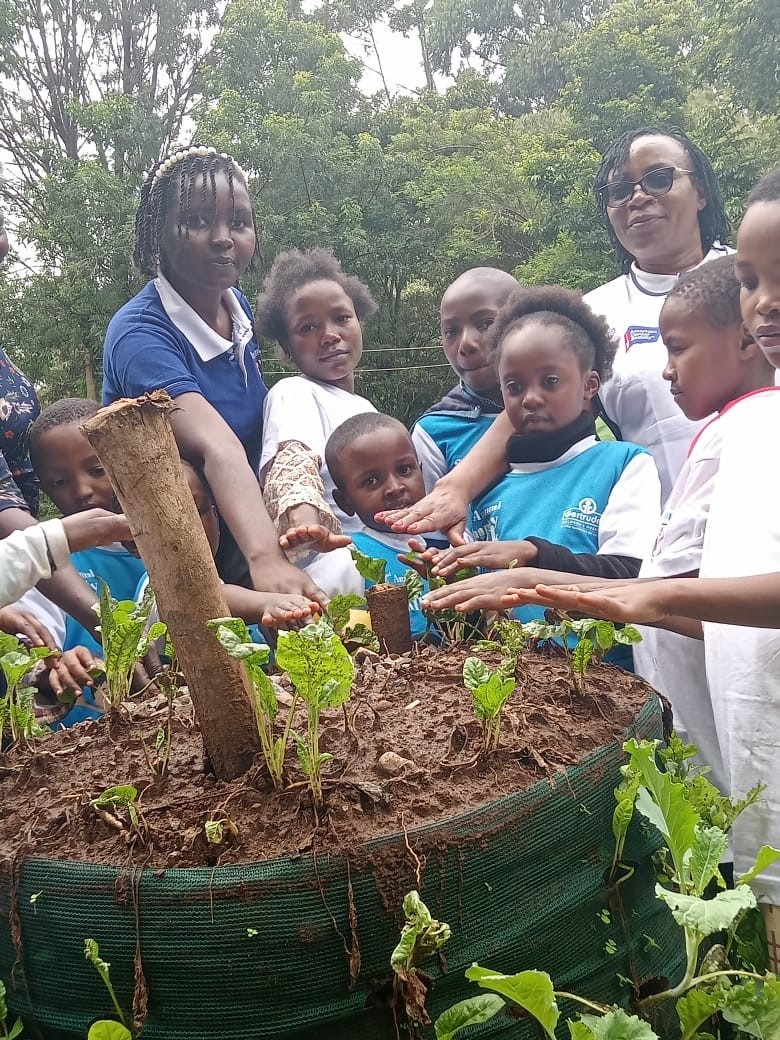
That’s why, together with Meru Hospice, we’ve started a project to help families grow their own food at home. We provide training, seedlings, and large soil-filled sacks, which can be planted at the top and sides to create a small, nourishing garden — even where land is scarce. These vertical gardens give families fresh vegetables and a source of hope and independence.
A small nursery has been set up at Meru Hospice where volunteers are raising vegetable seedlings like spinach, kale and amaranthus (a spinach-like leaf and a grain), to supply to families, ensuring patients have access to nutritious food.
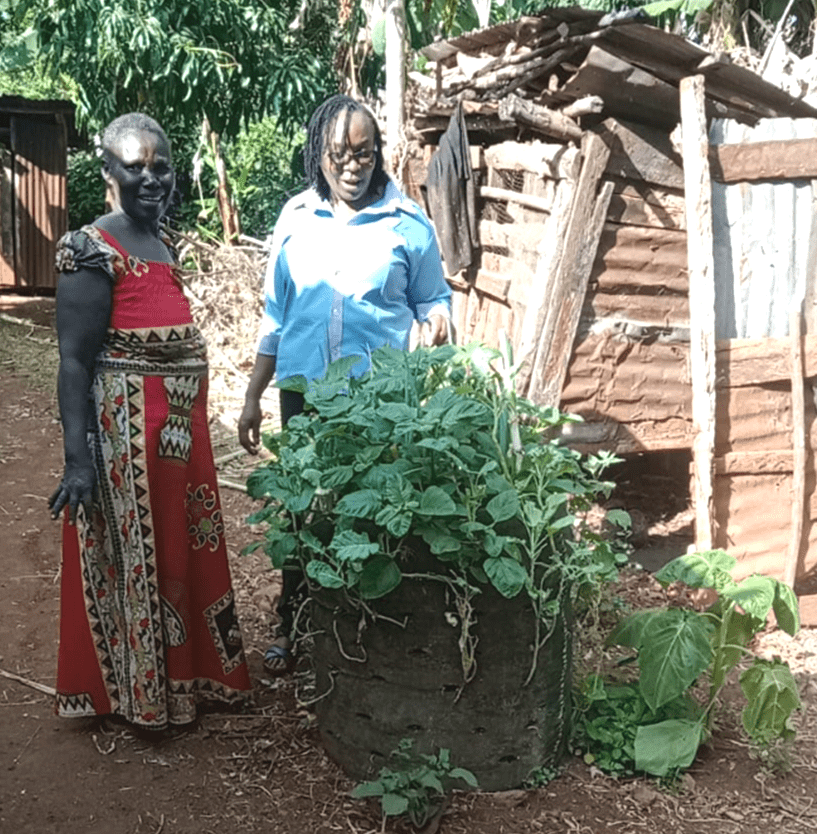
~Nurse Gladys, Meru Hospice
Thanks to donations from our supporters in the UK, this project is helping families not only feed their loved ones but also create a sustainable source of food for the future.
We hope to expand vertical sack gardens to more hospices across Kenya, bringing hope and nourishment to even more families caring for someone with a life-limiting illness. Just £20 can support a family to Grow Hope with their own vertical sack garden.
Please help to Grow Hope for families facing life-limiting illness donating today. Thank you.